The web never sleeps, which means the news/content cycle never does. "Jack White Has Dinner, Uses Napkin" isn't what a seasoned reporter
would call a get. -Alternative Press Editor In Chief Jason Pettigrew
I'm not enamored of Jason Pettigrew's half of the feature with Scott Heisel about web music journalism. I think he's disingenuous in the spots where it's not overly bitter. In his defense, there are legitimate things to be bitter about. Posting a tracklist and an album art counts as news, for someone, and "link-whoring duty" is an actual phrase used by Gawker. Reblogs of wacky internet videos poison the well, but keep a certain, ever declining number of readers engaged. Pitchfork reviews of punk and hardcore records leave me foaming at the mouth. Careless reviews of pop superstars make me question my sanity.
Pettigrew longs for the days of the noble gatekeeper, when a person had to be vetted by an authority before they could write about music for a magazine. And now, he says? Everyone's got an opinion. Well, sure. They always did. Now they can express it publicly and people might actually look at it. He aches for the days when access was limited (and this part is worth repeating) and he had it. But now, it's not and Good Lord, one does not have to first be approved of by Creem Magazine before writing or hearing the music. The horror.
"the days when gatekeepers (read: music press) were given the
responsibility for having well-informed, articulate opinions regarding
the material they were to wax wise about...All it takes is one sticky-fingered, disgruntled intern or one
unscrupulous person to receive the wrong package...and the introduction of a band's new work belongs to the masses."
Mercy, sir, a person could be introduced to the record by listening to it themselves without the precious context of whatever the writer decides to copypasta from the press release, a quick Google search and a list of cliches too long to name? I am mortified. (For best results, read this paragraph again in Foghorn Leghorn's voice.)
Admittedly, that's a disingenuous summation of his argument. Those days of gatekeepers being paid a maybe decent amount of money to have opinions is gone, and we lose that, while we gain, and this is crucial, immediate access to the work itself, rather than sitting around for the intermediary of the music critic's judgment. I'd love to be a professional music critic, admittedly. But, everyone listening to it alongside each other means more people get the experience sooner. And our judgments were always a half measure towards other people giving an album their attention.
At bottom: I think this development sounds fantastic. I don't think improving a person's filter on what they read is a bad thing. Shit, I think you should be doing it anyway in every aspect of your life. Democracy means there are more critics, yes. But those experts still exist. They haven't gone anywhere. You can still find them. And some of the critics today will be the experts of tomorrow, as they'll keep writing, going to concerts and turning over songs in their heads. Democracy also means you have to do the legwork to decide what opinions and beliefs are most valuable and useful to you. You can still get those opinions from somewhere else, if you as a consumer don't want to do the work.
Two other points: 1) Pettigrew's not required to read the ramblings of the imaginary, but almost certainly existent college freshman who is obsessed with Nirvana. 2) That imaginary college freshman Nirvana obsessive? That was us, once upon a time. Nirvana might not have been my or your focus, but those ramblings could easily be his, mine or ours.
There's a lot of resonant scenes in Almost Famous, but the one where Lester Bangs offers William Miller $35 for 1,000 words about Black Sabbath is instructive. Here's the catch, Pettigrew aches for the time when he could be Lester Bangs, dispensing sage advice and long assignments to reporters or freelancers. Those days of access and using that access as a megaphone to which the kids will flock are done. They're not finished, certainly. The Rihanna airplane debacle proved that. But, like a knife to the armpit, you're going to bleed out and die and Pettigrew sees that coming.
Here's to whatever comes next.
This is years and years old, but I kept coming back to it privately. I didn't post it because of cowardice, but now that time's passed, it can finally exist outside my own head. As for this choice of song, well, "fuck the glory days" feels pretty appropriate.
The Massachusetts hardcore band plays their last two shows Friday and Saturday. Their influence on my life is too big to calculate right now.
There are so many stories. Most of them are variations on a theme: I am scared or low and listening to Bane makes me more confident and more kind. This happened in Chicago, in Pittsburgh, in Washington D.C. and in Rome. I saw them in two Bottom Lounges at two very different parts of my life.
Obviously, this is only the end until a good friend of the band has horrible medical bills and Bane does a benefit show. Then maybe eight people on the internet will complain how dare a band reunite after they break up. As for Bane's legacy, like every band, it's in how they made the audiences feel and how they treated their fans.
What matters is that Bane's last two Chicago shows were the best I remember seeing them. They looked like a band rejuvenated and played with obvious joy. The crowd for both shows yelled at them for multiple encores. What matters is that I sobbed through my cries for one more song. What matters is that I'm crying as I type this.
What matters is that Bane wants me to know it's okay to cry. What matters is that when I wasn't equipped to handle my life and couldn't find a way out of it, Bane helped me navigate.
And now that I'm beginning to equip myself for my journey, Bane says goodbye.
After night two, Bedard and I talked about comics and counseling. We talked about facing our fears as adults. I'll regret running away from Dalbec to catch a bus for the rest of my life. I'm sorry about that, Aaron.
So, to Bedard, to Dalbec, and to everyone who's ever been in Bane: Goodbye, thank you, and I can't wait for what you're doing next.
I think I can type this part without crying. I think I can. Ciao y arrivederci.
I thought they were gonna write longer songs. It's Blacklisted, though. It's never quite what you expect.
The return of Blacklisted feels spartan. No interviews. No teaser trailers. No touring. One assumes Deathwish Inc. co-owner Tre McCarthy cajoled the band into doing pre-order packages and a music video. "Oh, by the way," Blacklisted says, "here's a new full length. You might like it."
You know the story. Philly hardcore band does two full lengths worth of traditional mosh, loses a couple members, grows weird and mutates into something stranger and more compelling.
In between all of this, US tours, EU tours, Japan tours, everything falls apart. Blacklisted breaks up twice, once in a London Urban Outfitters. Vocalist George Hirsch attempts suicide (he talked about it at This Is Hell 2013 or 2014, I forget which), allegedly goes to prison and records an acoustic album under the name of a character from a book called Der Wehrwolf.
The previous Blacklisted release (So, You Are A Magician?) was about nine minutes long and three songs. When People Grow, People Go is 21 minutes and eleven songs. I get the impression of men returning to their boyhood love of the genre. The fast tempos and final cathartic seconds before the song cuts short are all here.
When People Grow, People Go is about the things you don't talk about. The sense that you're desperately stuffing your slimy, slippery intestines back into your stomach. The lyrics include:
-A friend's in prison for opiate addiction. -The continued disintegration of Mr. Hirsch's relationships with friends or lovers. -The many kaleidoscopic expectations of Mr. Hirsch as "guy in a hardcore band." -His struggles with depression.
Unlike in No One Deserves To Be Here More Than Me, the venue of one minute plus hardcore feels like a more comfortable venue for the lyrics.
A step backwards perhaps, though that implies that the quality isn't there. It is. When People Grow, People Go still a traditional hardcore record more than anything else. The tracklist and song lengths don't lie, but it's shoegazey and grungy in spots and I remember those parts more than I remember Gossamer or Riptide. Though Riptide does have a really cool "maybe I'll break somebody's jaw" moment. Gossamer and Riptide are serviceable and perhaps good (many bands would be happy to author the songs), but are ultimately forgettable. Can George write another batch of lyrics regarding people gossiping about him? Sure. Do you really want to hear it? Nah.
Foreign Observer has the only guest and that's Nick from Cold World singing the title through a vocal effect that makes him sound distant. Speaking of equipment, if you have ever wondered what a proper hardcore band would sound like through major label recording equipment, producer Will Yip's Studio 4 answers the question here: massive and clear.
Everything has space in the mix, with special attention paid to the drums. Describing it analytically is a minefield since I understand very little about mixing and mastering, but the recording feels correct and the drums sound exquisite and sharp.
It is hard not to look into the lyrics. It is hard not to take Mr. Hirsch at his word. Turn In The Pike begins with "they will kill you for your dreams" but continues "so what I need / is for you to shake me / when I start to drift to sleep." Mr. Hirsch is a man who knows the price of dreams and the price of art, and he's honest enough to say that for him the price is too high.
"when creation fills my mouth / just break my teeth"
I have trust issues. I believe Mr. Hirsch does too. I celebrate (literally, I danced around my kitchen when I first heard Insularized) a new Blacklisted record because it feels like someone else who understands how much of a gamble intimacy and sex are, and what can be taken from the person on a losing bet.
The final track (also the title track) is an object lesson in being alive and male. You want to do it on your own, but you know you can't. And asking for help is cheating or it's impossible. "I couldn't just call your name/Too proud to reach out when I was dying…" If it feels like a dirge, well, it is. What I get out of Blacklisted records is the acknowledgment that all is not well and the nerve, only occasionally, to admit it in public.
When People Grow, People Go is a record about abuse, given and received. It's about moving past the abuse or moving away. It feels ugly. It feels true. It's the best record this year.
The first song from this record, and also my favorite. Maybe this should be the single. Between this and Foreign Observer, you might actually get people outside our genre to listen. But whatever. You're reading this, you know my tastes. Play loud.
I wrote a couple things for the now-announced Punknews 100. It was an attempt to do a top 100 albums of the years 2000-2010, and it almost came together. This being 2014, people in my ear tell me this thing may finally see the light of day.
I'm mostly posting this to shame the Punknews hivemind to continue to collate the list, because I want to see the discussion that will come of it. If I had the opportunity to write up a list again, it would be very different, but I suspect that's the trouble with lists. There's large swaths that remain the same, but it changes and mutates (or ought to) with breadth of experience and age.
Spelling errors and other things are left intact because, well, that's how they went out.
I was initially bummed that I didn't get a couple of my all-time favorites, but found out later that Jordan got the truly important ones and I'd end up with my personal favorite, Career Suicide, a couple months down the line.
It was an honor to be thought of and included. Thank you, gents.
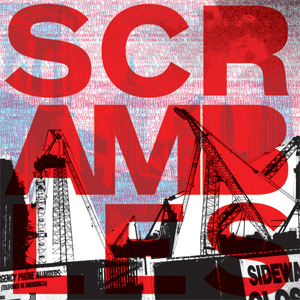
Scrambles
There's something disarming about Jeff Rosenstock's "inclusive alienation" lyrics that matches the frantically played (and excellently composed) music on Scrambles. The economy sucks, I lost my job, NYC is too expensive, my friends are all successful are turned from self-pitying wankery to a unifying celebration of the freedom and terror of 20-something modern life. The ska-punk framework makes it easy to throw in little touches that humanize the record, whether it's far too many syllables in "(Shut) Up the Punx!!!" or the ODB sample at the end of "25!"
Released for free digitally in early 2009 (and for money physically later that year on tentpole Asian Man Records), Scrambles set punkews commenters on fire not because of how it was released, but because of the content: the synthesis of unapologetic ska-punk, dead on lyrics, overwhelming heart and PBR-lubricated camaraderie. Other records on this list might be more technically proficient, more carefully recorded, more deftly worded, but you know what? Scrambles captures the essential soul and the grimy spirit of punk rock and that comes out crystal clear.
I Am the Movie
In 2003, everyone was incredibly serious. Mall screamo was small enough to drown in the bathtub, Drive-Thru Records approached the height of their ubiquity, Bad Religion was back with a bullet and finally Rise Against, Thrice and Thursday looked at major label waters after Less Than Jake gave the all clear with their most sobering record.
I Am the Movie then, blew up because of its neon colored soul. It was as sincere as anything released that year, but brighter, stranger and more intimate. "The Future Freaks Me Out Out" finally perfects the bedeviling Weezer cum Get Up Kids alchemy, complete with now-mystifying pop-culture references (Will and Grace?) . "My Favorite Accident" is as morose today as it was back then "Don't Call It a Comeback" still breaks land speed records with moog flourishes intact, while "Modern Chemistry" slyly cops to Justin Pierre's half-measures at sobriety.
In its bipolar about-faces between despondent and thrilled, Motion City Soundtrack proved that authenticity comes in more than shades of gray; it also comes in Day-Glo.
the Troubled Stateside The Troubled Stateside was Crime In Stereo's Long Island hardcore disc, the moment when they first began to calibrate their own filter through which to view the world.
Vocalist Kristian would stretch his range on later records, but here Crime In Stereo plays with the trappings of the LIHC genre and found there was room to grow and stretch, like the "dying in a hospital"-aesthetic of "Gravity/Grace." But the jewel in The Troubled Stateside crown is the all-encompassing final track, "I, Stateside". In five and a half minutes, the band blitzes through the themes of the last 11 songs, with the chorus, a fevered, supercharged hosanah, "God, please save these troubled states."
The Troubled Stateside is a record that is influenced by living in Bush's America, but remains important today because it could go from macro to micro and back without losing intensity or focus. It's about growing up in a country you thought you knew and not liking what you found, played with nothing held back or close to the vest.
Ruiner
One of Rob Dobi's bleakest design jobs, Ruiner is as straight-forward as its title and "birds attack boy" art would have you believe. Buoyed initially by the release of "Me Vs. Morrissey" on the that year's Warped Tour compilation (like He-Man going through a Chinese phone book, as one critic put it), the question at the time was, the forthcoming Ruiner couldn't be better than Mute Print, could it?
About that: Yes.
The instrumental intro to the opening track, "The King Is Dead" was just a tease: It simply got faster and maintained the intricacy, a display of virtuosity meant only to show the listener they didn't know what's coming. That song's first words are a reference to autoerotic asphyxiation, and the song itself is about committing suicide by hanging from the garage.
The rest of Ruiner was almost equally humorless, most songs memorializing a disintegrating romance with a vulgar, pitiless focus that emitted little emotional light. It's a bummer of a record that way, but the only way you can slow down enough to tell is long after Ruiner finishes and that just means you should play it again.
Career Suicide
Sincerely believed histrionics in bullet points:
-Vulgar without being trite.
-Virtuosity without ostentation.
-Weary, but not exhausted.
-To skate to and to be held by.
-Bad Religion being recorded by Kerry King.
-The final, towering shot in Nitro's brief, nearly unfuckwithable salvo of career making records.
It ain't magic, kid. It's as pedestrian as the culmination of hard work, talent, relentless touring, learning from mistakes, willingness to be in debt and leave lovers. A Wilhelm Scream aren't miracle workers.
Mundane as it is, those are the reasons Career Suicide is so good. (Well, that and the Blasting Room.) Career Suicide is more intricate because they dared to write the songs they thought would one up Ruiner. It's faster because they had the personnel to sustain it. It’s surprising because A Wilhelm Scream broke, again, what we thought was their ceiling.
What makes Career Suicide so special is how evenly it blends speed, technical prowess and metric volumes of compressed, focused, gotta-get-it-off-my-chest emotion. The balance of those elements is flawless and the recording sprightly enough to capture it all.
Yeah. Nitro went out on a good one.
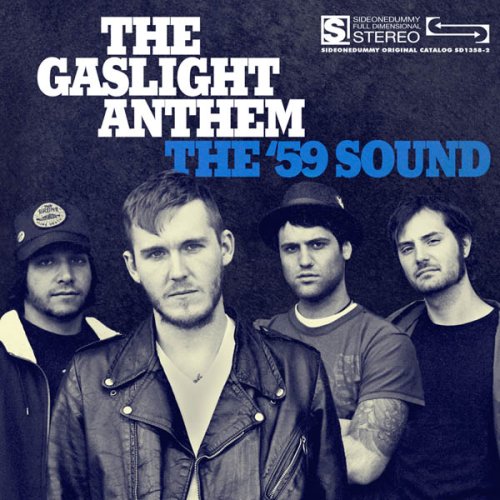
The '59 Sound
It starts with the crackle of vinyl, for fuck's sake.
It's really tempting to view The '59 Sound as reactionary, or as if it must be an opposing party to whatever surrounded it in the pop landscape. It isn't. It's a record about girls, Saturday nights, driving, Maria and records. They're dudes that like Springsteen, Miles Davis and Otis Redding more than Rancid and produced a record that reflected those influences.
It really is that simple. The ’59 Sound wormed its way into listeners’ hearts the way hardly anyone ever talks about: great songs played without shame or a knowing wink at the listener at a time when the style isn’t in favor.
There's telling details like the diner staff comping Fallon a side dish with his coffee, waiting for a woman that won't come. With a lyric like "Broken Bones Matilda left a note and a rose…" one simply understands "Film Noir" was titled not only correctly, but also as an aspiration.
Their earnestness paid out beyond their wildest dreams. Springsteen didn't just let Gaslight Anthem kiss his ring, but went one further and joined the band for the title track in Europe during 2009. There are subtler influences and it’s ultimately what makes this uncomplicated record so surprising and resonant. Anyone can get Springsteen, but the Cure on "Old White Lincoln?"
Listen again...
A fully enumerated list of which songs on these records broke my
skull open and forced me to think differently about music would keep me
here forever, but man, I've been partial to the cane sugar sweetness of
Motion City Soundtrack for years, so have the sub two minute banger
"Don't Call It A Comeback." WE DON'T LIKE ENDLESS CYCLES...
The first panel contains a Bad Brains reference, typeset in the San Francisco skyline. Writer Rick Remender knows how to set a tone.
Remender's mainstream comics work (Captain America, Uncanny X-Force, Uncanny X-Men) comes with a heavy first person narration and it returns fully here. Marcus, the main character, is a teenage gutter punk with a mouth beyond his years. His family was killed by a suicidal schizophrenic jumping off the Golden Gate Bridge. Marcus drifts between stealing from sanctimonious businessmen and flinging himself off the same bridge his parents died under.
It's not a good life and while Remender doesn't write <i>that</i> in the sky, he has no trouble showing and then telling us.
Penciller and co-creator Wes Craig is heavily indebted to Hawkeye penciller and Valiant concept artist David Aja, or whomever Aja is himself indebted to, and it works wonders. (There's an especially effective scene where colorist Lee Louridghe uses the Hawkeye flat purples as Marcus contemplates suicide that is so obvious as to be homage.)
Little details like bleeding the gutters a little into a panel to highlight the person walking away, or how a female character's face has shades of Paul Pope make the thing sing. Some panels are set at an angle, one, I suspect to heighten storytelling and to mimic San Francisco's famously steep geography.
What's also notable is just how many panels are on a page, as high as 17, and instead of an average of 6-8, it's closer to 9-12. I hesitate to say much about the story. Marcus is enrolled into a school for assassins, called King's Dominion Of The Deadly Arts.
A comparison to Morning Glories, another Image comic about a high school with ill intent, is a red herring. Last I checked, the school in Morning Glories has imperial designs over time and space (I cashed out after the third trade) and with the second issue of Deadly Class, it appears Deadly Class' school is merely a place where teenagers become killers for hire.
I texted excitedly to Adam Witt (from whom I now steal the phrase "breakout-caliber" to describe the pencils of Mr. Craig) that this was the Rick Remender project I've been waiting for. Here, finally, I think is the comic where Remender's history with and love for punk suffuse the work.
The police are mentioned here quite a bit. They're always the antagonists, and referred to as pigs and fuzz and a number of other likely period appropriate slurs. At first blush, it sounds corny, but given the students and the time period, it rings true. They would say that. They would sound like kids trying too hard, they're in assassin high school!
(Speaking of trying too hard: Deadly Class can be described as Stray Bullets robs The Invisibles at gunpoint.)
To acknowledge it's been a couple months since the first issue came out: I thought the ending to issue two was unsatisfying (Will Marcus kill a person now that he's enrolled in assassin school?), but issue three startled me to the point where I gasped as I read it on the train. I blush and smile as I see myself in the straight edge high school student. There is an almost-Phonogram level of music nerdery in issue three. It shows character.
Remender leans very heavily on the idea that the comic is authentic to his life and his own lived experiences in the backmatter. Only he knows, but even if (or especially if) not one single detail of Deadly Class was inspired by a life experience, what matters is that, like all good fiction, Deadly Class feels true. If you can lie that well, that's how you know you're a good storyteller. If it happened to you? Shit, that's almost cheating.
Deadly Class is currently up to issue four, with the first collection announced for a release in July.
Have
I really not put Minor Threat onto this blog yet? Well, wait a little
while longer. Have Thrice do an especially messy and glorious cover of
Seein' Red and Screaming At A Wall. Recorded during the meticulous
Vheissu sessions, Thrice blows off some steam here. It feels like home.
I write this to organize my thoughts and puzzle out how I feel. Patrick Kindlon was kind enough to show me the packaging, with an email chain from Deathwish Inc. founder and designer Jake Bannon at an October DRUG CHURCH show. This isn't a review.
There is a major conceit to Try Me. The conceit is this: Try Me revolves around the early life of Angelique Bernstein, or as she now calls herself, Jeanna Fine. It is told primarily through two interviews which focus on her life before she came into the porn industry. These interviews speak frankly about the multiple times she was raped, the oppression she faced after having sex with women and her life choices. The interviews are not, in my opinion, salacious.
Put crudely, her life's been rough and hearing her speak about it is compelling and depressing. Try Me is easily the most brutal thing Deathwish has put out this year, last year, next year or perhaps in any year the label will release music.
To anticipate the snark:
-Yes, I'm aware that the devastating nature regarding frank discussion of rape (a sadly common experience) speaks volumes about the castles in my mind about the place of aggressive music in this world.
I step around those interviews in my repeated listening, like landmines. You ought to hear Try Me once, straight through. It will not be a pleasurable experience, but you will talk about it. For better or for worse, my thoughts of Try Me are in the shadow of those interviews.
- - - - - - - - -
I should talk about the music. Try Me is 11 tracks, of which two are interviews and nine are songs. Of the nine songs, three are over five minutes. Of those three, one is "Dingo Fence", a 10 minute song where a double-vocaled Patrick mostly yells "All the dumb cops, they get what they want." "Apport Birds" is six minutes and feels like 20.
The nine songs on Try Me are fairly divergent in terms of length. Three push past five minutes, two hit four and the balance are three or less. SELF DEFENSE FAMILY indulges their shoegaze and drone influences on all of these songs, to greater and lesser effect throughout. "Turn the Fan On" is technically four minutes, but the song part ends at about 3:15, with the rest being a guitar riff repeated and the sound of a dripping sink. It's effective, and while the game of spot the influence becomes tedious (and reveals how narrow my comparisons are), I remember BLACKLISTED employed a similar trick on No One Deserves To Be Here More Than Me. This is not to say BLACKLISTED invented it…
"Mistress Appears At Funeral" sung by Caroline Corrigan is an unexpected highlight. Her voice, as the lead, is a surprise and the cooing harmonies help everything glide along. It's about the discomfort of a mistress at a funeral and being unsure what to do with the emotions and the prying eyes and judgments of the other mourners.
I understand how to process the shorter songs, so I therefore believe I like them more. I prefer "Weird Fingering" to "Aletta," but I know better than to think SELF DEFENSE will play "Weird Fingering" live. There is also the sound of a cell phone notification going off somewhere on the record that takes me out of the experience.
I cannot listen to Try Me like a traditional Deathwish record. It is ugly. It is uncomfortable. It is worth a $6 digital download, I believe. It is worth something more than money: your undivided attention.
- - - - - - - - -
I ought to talk about the packaging.
It includes photos of Angelique Bernstein or Jeanna Fine at different stages in her life, one as a fifteen year old girl, others as the woman she is today. Both show nipples. After hearing the interview, I understand why they are there.
I am made uncomfortable by the inclusion of the photo of the fifteen year old Angelique Bernstein or Jeanna Fine with her visible nipples. I'm aware discomfort and an absolutely bare projection of personhood is the point of Try Me. I wince and cringe at it. I avoid looking at Try Me's packaging for that reason.
As for the ethics of the use of the interview, I have no idea. Angelique Bernstein or Jeanna Fine is credited as a SDF member, the interviews are not catty, and what's said is direct. Her voice appears to be authentic. Given how centrally she figures to the art, is she entitled to whatever meager royalties Try Me will generate?
- - - - - - - - - - - - -
Try Me is a good record, where good means effective. I can think of nothing like it in what I listen to. Deathwish Inc. owners Jake Bannon and Tre McCarthy are right, I won't listen to the interview more than once. But Patrick and guitarist/producer/engineer Andrew Duggan are also right, I won't listen to that interview more than once because I am scared of the interview's power.
In short: Try Me is the first Deathwish record to inspire genuine fear and actual panic.
Try the song, "Turn the Fan On." It can work as a single. It's very, very bleak, but it gives you very much the tenor of the record.
Partycrasher should be called Dearly Missed Houseguest. I understand why Partycrasher isn't titled that way, but at least in my home it is welcome like a friend I haven't seen in six years. Some perspective is useful: Their previous full length Career Suicide had an anti-Romney song ("Pardon Me, Thanks A Lot") whilst he was still best known as a Massachusetts politician. That's how long it's been.
Any outlet worth their salt is going to talk about how Partycrasher is two things: It is fast and it is
technical, and given how thoroughly saturated Career Suicide was with those two things, Partycrasher is worth marveling over. Those outlets are right. What they're unlikely to mention, however, is melody. Syrupy melody, everywhere. At some points, Partycrasher feels like a DESCENDENTS record played by IRON MAIDEN. "I'll wait till the end of the world / to get the last laugh on you," Nuno sings and his voice almost makes me desire the apocalypse.
It's also a stunning record, quietly. "Iceman Left A Trail" has
some pitch-perfect BAD RELIGION oozing ahhhhhs beneath and behind the
fretboard wizardry at the front and the back of the song. If you've seen
A WILHELM SCREAM, you don't have to work hard to imagine this song
being performed with Trevor Reilly and Mike Supina grinning at each
other like madmen, trading off the racing, intricate guitar leads.
"Devil Don't Know" drops an acapella chorus that I swear is stolen out
of Motown.
This is A WILHELM SCREAM's first not-Blasting Room recorded full length, though it's Blasting Room mixed, and if the band didn't make a point to mention it, I doubt the listener would notice. Errr, well, Nick Angelini's drums are less prominent in the mix. Blasting Room does drums in a specific way.
As of this writing, there's six absolute stunners and five other songs that don't click yet. I'm not worried. I felt that way about Career Suicide when I first heard it, too.
Reilly once said something like the band wouldn't release another record if it wasn't better than what came before it. And if you've spent any time alive at all, that sounds like complete horseshit. Bands release records all the time that pale in comparison to their prior material for any number of reasons (no inspiration, no time, new members, lazy writing, lazy living, contractual obligation, listener expectations, listener error) and lie because, well, they've got another record to sell.
Trouble is, each successive A WILHELM SCREAM record actually is better than the last.
Mute Print sounds positively amateur now, Ruiner followed it up with a pitiless focus, while ratcheting up the degree of difficulty, a year to breathe and then Career Suicide appeared, doing everything better, in less time, with two very epic songs (five odd minutes) to wreck the curve. The stopgap self-titled EP in 2009 showed even more dexterous solos than Career Suicide, where bassist Brian Robinson had the standout solo on the record.
Partycrasher has more technically challenging parts better integrated with the songs they're a part of. There's nothing over four minutes, but the songs lose none of their wow factor. There is joyful virtuosity in these songs, evident in the couple seconds of teasing on "Boat Builders," "Devil Don't Know" and "Born A Wise Man."
Speaking of closer "Born A Wise Man," it is everything I could want from an A WILHELM SCREAM song. It is fast, it is precise and it it speaks about what I assume is the band's origin. It treads similar themes to Career Suicide's closer "We Built This City! (On Debts And Booze)"
1)A WILHELM SCREAM isn't in this for the money, because there isn't any.
2) There's a lot of hard work involved that will go on for a very long time.
3) In a touring circuit of liars, frauds and disingenuous "heroes" out for a buck, A WILHLEM SCREAM is sincere. We know this because they tell us.
It's y'know, boilerplate, but the specifics shine.
I've only listened to Partycrasher straight for six days. My gut is I'll be less enthusiastic in a couple months. But then again, I'm so enthusiastic now I felt compelled to write. I know I'll be listening to Partycrasher for years to come, if that softens the blow.
I feel strange recommending a record that half of which is either there or hasn't clicked for me yet. I doubt I could do this with other bands, but I'm talking about A WILHELM SCREAM. They're good for it.
I paid No Idea $7 for a download on Halloween. If I had known the download didn't come with lyrics, I would have hesitated, but hopefully No Idea will rectify that.
In short: Partycrasher is faster and more squiggly and more catchy than you'd expect, from a band known for all of these things. It's a marvel, but it's A WILHELM SCREAM. They've made marvels their job.
Ladies, gentlemen, "Born A Wise Man." The whole song is great, but that thrashy outro is a challenge to us all. "The bar is now here," it says. "Who's up?"
Perhaps you are interested in punk rock. Maybe you read that excellent Freaky Trigger piece about punk rock and Young Avengers and thought, "huh." Maybe you've heard a little before but Kieron Gillen and Jamie McKelvie are getting you more interested. In that case, let me introduce you.
Please.
I'll dispense with the backstory: Nubile white men with guitars a good half century ago figured out you didn't need talent to play music, you just needed anger and momentum.
Punk rock's major contribution to music's history (aside from a reminder
to get out before you start to suck) is the idea that an aspiring
artist does not require someone else's imprimatur to make music. If
someone isn't making the music you want to hear, you are now deputized
to make it yourself.
Seriously. If you've got a song in your heart: Write it. Now. This very minute. Stop reading. Go. Do it. Now. Do it.
There's connective tissue between punk rock and comics, if you know where to look. Most obviously, Patrick Kindlon and Matthew Rosenberg, to name two, have released some of my favorite music ever. Mike Cavallaro, known to the Eastern Seaboard as Johnny X from Sticks And Stones, Becky Cloonan, Rick Remender, Jen Van Meter and ad infinitum. Gillen and McKelvie's history with music and a member of punk's extended family, Britpop, is suggested by the above image. It's called Phonogram, there's two volumes and Volume Two, The Singles Club, forced me to confront my fear of dancing. It presented better arguments for dancing than my reasons not to dance.
This is not a history, but a survey. Five songs, cast widely to get a taste in your mouth. If you like it, come back next week. If not, you're only out the time you took to listen to five songs. These aren't my five favorite punk rock songs in the world, but these are five songs which all suggest many of the cardinal directions punk rock moves in. You may hopefully find something you like.
The songs hopefully suggest the focus, the lens, the catalyst and the fuel. There's a Romanticism to punk that I find still useful as I age. There's other parts to punk, the branded nihilism, the clear-eyed hopelessness, but those are doors to go through later on. I still need to get you through this one first.
Like all surveys, it's necessarily incomplete. Emo is a longer story than I have time for and oh God I'm rambling. Five songs. Play loud.
Until I figure out how to embed playlists into Blogger, just go here.
Rise Records curates an excellent four song split here.
You get two very distinct tastes, the first being Make Do And Mend's carefully collected emotion (think American Football and Hot Water Music) and The Flatliners close out the split wild, raucous and intrepid as punk ought to be. It's two songs by both bands, so this ought to last you a week. It'll be a great week, though.
"Don't" is another Make Do And Mend song. It's aggressive. It exists. But "Tell Me" is the scene stealer. "Tell Me" trembles. "Tell Me" has an ache like a tidal pull. It's one of my favorite songs of 2013 the instant I heard it. Think "Desert Lily," mixed with a smidge of "Coats," their song on Run For Cover's Mixed Signals compilation.
"Tell Me" centers around the chorus of "show me something life won't break / tell me something time can't take away." Yeah, it's dramatic, but like Make Do And Mend's best songs, it's earned with the lyrics "the end will draw you in, just like a moth against the wick" or "a hundred calling bells." "Tell Me" is earnest without being saccharine or using too much of cliche.
The two Flatliners songs, by comparison are dexterous, fast and seem giddy on the possibility of what the band can do. There's a ridiculous (and ridiculously cool) guitar solo in "Caultron Girls" for the entire second minute of the song that sounds super Wilhelm Scream-y. Which is great. I love Wilhelm Scream. Said solo is one part fitting with the song, another part display of virtuosity, as if daring their friends to one up them.
The song appears to be about the young women who worked on the Manhattan Project without being told what they were working on, and if they spoke about what they did, rumor had it, they were killed. According to one participant, they watched numbers and moved dials, but weren't told why. This (and a cursory Google search) explains lyrics like "your life's a head game / when your job description is naivety."
"Daggers" first vocal is an almost doo-wop "ooooooooh." It's midtempo. Or, as close to mid-tempo as The Flats get. As mid-tempo as "This Respirator," I suppose. Hyperactive. Manic might be a better descriptor. Wait! It sounds like one of the good songs off of Dead To Me's African Elephants. Like someone fed The Flatliners horse tranquilizers and it didn't take.
As a fan of both bands, this represents some of their finest material to date and has me eagerly anticipating fuller portions, but hell, I'm an unwashed music nerd because these tiny portions sometimes contain incredible rewards. I hope they don't get reprinted in a year, by virtue of making the download or vinyl less valuable, but also, these songs being so good I view as the reward for paying attention.
And yes, they ought to be collected in an inevitable b-sides collection. Just in the future, okay? Not right now. Because right now, it's summer 2013 and while I don't have the coolest music or the most new music or the most groundbreaking music, it's new music from two very different bands who have hit their stride, but not yet their peak.
Alas, none of the full songs are on YouTube quite yet, but you can get a taste of the split below, which includes, luckily enough, 45 seconds of "Tell Me" and 45 seconds of "Caultron Girls."
That's not, technically speaking, true, but the sentence is pithy enough for retweets, so it stays in. It's a little bit true, though. Or maybe it's just that Eric Richter is singing. Hold has a very wide scope. Post-rock is the obvious genre tag.
My first listen to Hold was strange. I was on a plane to Peru and got two hours sleep the night before. So, I drifted in and out of light sleep while Hold played. The effect was disorienting and felt like the experience was swathed in a dreamlike haze. I'd wake up in one song, fall asleep and arise in another. I couldn't (or chose not to) grasp anything of tracklisting or detail. I could only glimpse at the music, through the shroud of fatigue and chance. Authorial intent? I'd been in transit a solid 14 hours.
When I touched down in Lima, I knew I wanted to hear Hold again.
There's an element of colossal, ethereal melody to the endeavor. It's not just the three guitars, though that helps. My knowledge of shoegaze is limited, so I'm not sure what the right language is for massive moments. I believe Highness' members all understand soft/loud dynamics and Richter's voice has a range of melody that they can dig into. Try The Out_Circuit as a comparison. Both go heavy into the soft/loud dynamics but use both fairly naturally, due to the composers previous bands.
Hold is 2 a.m. music, I believe. My touchstone for that is Deafheaven or Envy, but likely yours are better than mine. Explosions In The Sky? Maybe? I believe the softer songs work better than the heavier ones. And heaviness is relative, here. It's not Hope Conspiracy, but Highness can get aggressive. (See "Stitched Together.") "Forking Roads," which immediately follows "Stitched Together" is a wonderful instrumental, one of my favorites since the first two and a half minutes of "A Bridge Too Far."
Holds runs for about 37 minutes over nine tracks. Of the nine, one's an 1:38 interlude and the final track is a :38 outro, with all but one of the songs being longer than a rough 4:30. I suspect that my first listen insulated me somewhat from the minor, but noticeable meandering in the compositions.
Listening to Hold like a sane human being would, front to back, without repeating tracks or sleep deprivation, gives a fairly clear "objective" assessment. It's an excellent post-rock record, sewn together with Richter's voice, which sounds well suited for the task. His bandmates know how to hold down the rock end of things, and what you get is oriented in that direction, with Richter giving the players an excuse to try those melodies they've heard so much about in their previous bands but never quite got around to.
I don't know if you'll want to listen to Hold drifting in and out of sleep, but the experience was one that turned the familiar act of listening to a bunch of .mp3 files called a record into something exciting and unexpected. Whatever I heard, I heard and whatever I got out of it was my thoughts, without my thirty million filters collectively called the synthesis of my opinion.
In summation: I listened to Hold a couple different ways and I liked it both times. I suspect I'll still like it at the end of this year and perhaps the next. You can buy it here.
This is no longer representative of Highness, but the video I was going to use can't be found using Blogger, so, instead, here's something not quite as good, but still Highness' music.
I think it was Jimmy Eat World who said that no one makes money on a split 7-inch, which is a shame. This one, featuring Pianos Become The Teeth and Touché Amoré deserves it. On this two song split, each band contributes an excellent song, with striking art direction from Touché Amoré guitarist Nick Steinhardt. The main colors are a deep blue and tan, both of which recur, in a small way, in the art for the other band. He finds urban decay photos interesting. The genre does nothing for me, so I pass over that.
Looking over the .pdf of the layout, I think that's the birds from the "Gravity, Metaphorically" music video in the album art. Yes. Energy and thought were put into the package.
It will not surprise you, I am sure, to hear both songs are about
failing relationships. Touche's was one that was built with an
expiration date in mind, apparently. "Gravity," of course, is used as a
shorthand for knowing the thing you knew was coming came. "Hiding," starts
out as one and then veers into avoiding people generally. The black
text on tan backgrounds makes the "Hiding" lyrics hard to read without
squinting.
At four minutes, "Gravity" may as well be a double feature for Touché Amoré. I'd argue it is, actually. The first half sounds like Touché and the second half sounds like Envy. Perhaps that's a little pithy. I'm an absolute goon for Envy, and so are the Touché boys, so that's a net positive in my book.
"Hiding," by Pianos Become The Teeth is real midtempo. It's one of the best sad bastard songs I've heard in the last couple years. I lived in Western Pennsylvania for four years. I know something about sad bastard songs. I'm struck by the lyric makes you almost miss the smell of smoke in your clothes. Like you knew the memories were bad, but you think fondly of them regardless.
I bought the digital download for $1.50 from Deathwish, which comes with the full album art in the package. I think it's worth your time and a little bit of your money.
A friend of mine said I should give that Pianos song a couple listens to let it click, because when it clicks, it's fantastic. He's right. "Hiding," by Pianos Become The Teeth. Enjoy.
Decompositions: Volume Number
One is Circle Takes The Square's first full length in, oh
Christ, nine years. It really has been that long. The sun has set on
screamo and since risen again in that time since As The
Roots Undo. That's not to say Decompositions
sounds dated, but that…shit, man. Things have changed.
Circle Takes The Square hasn't. If you
liked As The Roots Undo, everything on Decompositions will be familiar to you. They
remain a feral, sprawling screamo band and Decompositions
is their most cacophonous and densest slab of the genre yet. Before I
forget! You can buy Decompositions from bandcamp right now. If only Robotic Empire could have done that back in the
day.
Do you like chanting? They still do
that.
Do you like the abrasive, coiling,
screams of the Mr. Speziale and Ms. Stubelek? They still do that.
Do you like the whispering from Mr.
Speziale and soft attempts at singing from Ms. Stubelek? They still
do that.
There's now more of it. To a point, I
suppose. Decompositions' first four tracks were
released on their own in 2011. Decompositions
clocks in at nine tracks and 55:30. As The Roots Undo
was eight tracks, technically and about 44 minutes. Given that the
first track is a one minute intro, it might be more truthful to say
that As The Roots Undo was seven tracks in 44
minutes.
As for how Decompositions
was recorded, I think the drums got a bum deal. The vocals are as
clear as you'd want them to be. No one here is Pavarotti. Like As
The Roots Undo, a lot of careful attention was paid to the
album artwork. The pieces included with the record are detailed and
usually involves spirals or gentle curves.
I don't hear any single tracks that are
easy to break off, there's no "Crowquill" to be found on Decompositions. Yes, there's a three minute song,
but it doesn't play nicely with other bands. If you're gonna listen
to Decompositions, you're going to hear all of it.
Or, I think you should. I'm not sure how their ornate lyrical, visual
and musical style will play alongside any artist less baroque. I take
the time to write this precisely because Decompositions
as a single entity has such a powerful pull. It's taken me twenty odd
listens to find when “Singing Vengeance Into Being” becomes
“Arrowhead As Epilogue.”
As for
what we call this, shit, that's half the fun. Grandiose skramz?
Hyper-elaborate screamo? Vulgar, untidy riff compendiums for Sea
Shepard GIs?
The individual tracks are
hard to pick out without extensive listens. That's not a compliment,
but they'll forgive me, I'm sure. The two reviews for this I've seen,
Brian's at Alt Press and someone else's from Exclaim.ca, can't quite
pin down the thread that pulls the record together. That thread is a
South American author called Jorge Luis Borges.
I'll explain. Borges' stories, some of
them had a massive sprawl and sweep: The Library of Babel, obviously,
but also The Circular Ruins*. But what was important for those two
stories was a sense of breathtaking, dangerous and immeasurable (or
unknowable) landscapes. Decompositions has that sense of scope.
(There's even a labyrinth in the Decompositions'
art, for Christ's sake! See left.) If one was ever fast enough to outrun a wolf
in menacing, alien woods, Circle Takes The Square would be the band
to describe that terror. A quick look at Circle's website shows they
use a Borges quote as an epigraph
to "Way Of Ever-Branching Paths." I have a keen grasp of
the obvious.
This leads them into melodrama
occasionally (see below), but we forgive them.
And the praise / it was
fraudulent/ Nothing sacred in my fingerprints / Shed my skin as a
parting gift/ Slash and burn / and start again/ Through the lens of
predation/ Monochrome interpretations /Only fit for the color-starved
/Strip-mine my flesh / I will ascend
I wonder, sometimes, if they'd write a
five minute emoviolence epic about stubbing a toe.
And then there's the final track, the
mostly acoustic "North Star, Inverted." It's 10:55. It
might be the best song on the record. No, seriously. Stop looking at
me like that. Most Circle songs are mostly thrashy screamo with
moments of chanting or pretty bits, before going back into the blast
beats, right?
This one is made the other way around.
Once you get past the minute or so of "oh right we're a screamo band" in the first movement (I
use the word loosely. Our classical musician friends would blanche,
I'm sure.) it's Mr. Speziale and his acoustic guitar with light
accompaniment from the rest of the band.
It would be wrong to call it a lullaby,
but the lion's share of the song is gentle. It's a song about the
apocalypse, but the delivery makes it sound like it's something
almost casual. Like staring at the ruined city from the front of your
porch with your friends, with a guitar and a bottle.
The North Star / she nods out
/ Doused her torch / left us forever / Without promise or penance /
We're left to merge with the trench / Taught the cruelties that it
takes to survive /Just accept to be free.
So: If you're looking for a single, I
suppose you could pick the final song, the epic 10:55 long closer. Go
for it. See where that gets you. That's how I feel about the whole
record, actually. See where it takes you. Like going to Venice as a
tourist, getting lost in Decompositions is the
point. Enjoy the trip.
Hi. Yes. This review has been updated, slightly, at roughly 8 pm on February 8, 2013. I feel I missed some description of the actual music, and added some, swapped
out an image for another one and made minor changes. I couldn't write this and not leave you with "North Star, Inverted," right? Well, I suppose you could go look for the full-album stream on YouTube. It's not hard to find. But it's late, and frankly, these things should end on a good note.
*Many others, of course. If you haven't read Mr. Borges, his
Complete Fictions will run you 20 odd bucks and will be a more
worthwhile purchase than whatever piece of ephemera you've convinced
yourself you need. Taken as a whole, his stories explicated an
imagination that could traffic in ideas with nine figure budgets and
execution dependent stories with tiny payoffs with life-defining
significance. That he could go anywhere in between those two without
any noticeable drop in quality is why I'm a Borges goon.
I listened to a lot of music in 2012, but these twelve songs most often and most obsessively. Play loud.
Copper Fields by Blacklisted. The band takes their stage magic v. real magic as motif for relationship and executes on it perfectly. The vocalist is no magician and the love between the two people wasn't conjured up whether from the depths of our psyche or a sleeve or hat. It's also one of Blacklisted's best songs, new or otherwise, and stands taller, I think than most of the incredible Heavier Than Heaven or No One Deserves.
"More like suicide king / less like ace of hearts."
Drag My Body by Hot Water Music. I believe this is the best song they've ever written. I didn't bother listening to Exister because of how good this song was. It's not like Hot Water Music is going to top it until the next record. Another pinnacle from a band known for incredible highs and breathtaking views.
"Something's rattling my bones!"
Bag by White Lung. They might dislike choruses. I love 'em and in one of my favorite Deranged records to come out in years, a chorus means something. I listened to this record in transit, but especially during the NATO Summit. It was music that made me feel ashamed for not protesting.
"I'm about to / warn you"
Desert Lily by Make Do And Mend. I must have heard this guitar line somewhere before. Maybe in another life? One before, or one yet to come? I'd say this thing cuts, but it isn't meant to cut. It's meant to soothe and ameliorate. It does that. So it's a ballad about finally being home from tour and with your lover, and it might be the only one on this list. It's one song on the record that sounds the least like their guiding star, Hot Water Music. I want, desperately, to hear where they go after this.
"I've earned my share of home..."
Patriot-Hostage Calm. It's a mid to late album stunner. It's almost acapella, mostly four voices and if the Futureheads hadn't already done an entire record acapella, I'd stare slack-jawed. But, it's executed well and surprise counts for a lot. It might have my favorite lyric on the entire record. It's about American history and the disappointments that come from knowing where that progress comes from and what it entailed.
"And drunk with pride / you hurt / you stole but I still carried you home / from the jungles to the deserts / to the trenches' reddened snow..."
Here Comes My Man-The Gaslight Anthem. Brian Fallon's lyrics tend to find easy crutches for purchase. Blood is spilled on the page. Black as a raven. Women are drugs. You get the idea. Despite that, I connected with Here Comes My Man in a way that I haven't connected with Gaslight Anthem song since I first heard Wherefore Art Thou, Elvis when I was in Pennsylvania. As an aside, that's a Planes Mistaken For Stars shirt that the drummer wears. Oh yes.
"Singing oh sha la la..."
The Obituaries-The Menzingers. So the Menzingers are pessimistic. They've got every right to be. They know intimately how far good songs will take them, and they also know intimately how those same songs can't pay them rent. But. Some kid will hear this song and know that the Menzingers aren't insulting their intelligence or talking down to them. With this, they become the heroes they always aimed for.
"I will fuck this up, I fucking know it..."
Constellations-Enter Shikari. The rest of the record is hit or miss, but the final track on A Flash Flood Of Colour is a game-winning home run. I'm not terribly interested in their sound generally, but this song is something fantastic. If it doesn't make you look up at the sky and smile, well, there might be nothing for you. It's the most traditional song on the record, by a wide margin. Maybe that's why I like it? It's easier to digest.
"with forgiveness as our torch and imagination our sword..."
Maple Boy-No Trigger. This song feels too good to be true. The rush of melody. The rush of speed. I'm sad the rest of Tycoon isn't as good, but between this and Checkmate, it was a brilliant, but not quite blinding ray of sunlight in the miserable winter.
"But now in its place / a legacy of full grown trees!"
Sunset On 32nd (live)-Strike Anywhere. Acoustic record. Live. It comes off of a record that has two parts, one part that's almost a BBC live session, it's clear and it's pretty. The other is from a benefit for the IWW and it's billed as more raucous, and it is, but there's almost no crowd singing, which is what you go to a raucous Strike Anywhere gig for. Except, of course, for one song and that one song is Sunset On 32nd. In this one song, you understand why this part of the record exists.
"and when they pinned you to the floor / did you say / 'officer I am not resisting you?'"
Self Immolation Family-Self Defense Family. It goes a indulgent by the end, the riff gets a little long in the tooth. But still. They need an editor, it's true, but until minute five, the six minute song is majestic and frankly, I didn't know the band that wrote Eddie Antar could do that. Maybe they can do anything...
Regardless of whether I did or not: In 2011, I feel my listening habits were too conservative. A quick scroll of my inbox shows, in stark relief, as to the PR people doing their due diligence to drum up blog chatter for their clients, and the ones I bit on were ones I already knew about. More than that, though: Even if I didn’t have PR comped YouSendIt links or official downloads, I could still have used, let’s say, unauthorized sources and listened to the music. I didn’t. Hell, I downloaded some records and never fucking right clicked and scrolled down to Open With Spotify, because I shielded myself in what I already knew.
Yes, I was in Rome. Yes, I was in London. This year, the routine bit down hard. I lost and I think it shows here.
Run For Cover blew up this year based on great records by YOUNG STATUSES, SEAHAVEN and DAYTRADER. Or, so I hear anyway. I didn’t listen to any of them. Shit! DEAD TO ME released their followup to African Elephants in Moscow Penny Ante. Nope. Didn’t hear it. POS’s crew, DOOMTREE, put out a crew record, hotly anticipated by humans, I guess and I didn’t listen to it. No Kings? No idea.
It isn’t a matter of “not getting to a record,” it’s a matter of having the record in my hands and not playing it. Where it matters to you, reader, is that this list well, it is going to be mostly made up of bands you expect to appear, with their newest entries.
What almost made the list was Do Not Resuscitate by Most Precious Blood (see previous blog post) and Polar Bear Club's Clash Battle Guilt Pride. I found Do Not Resuscitate too late for it to be eligible in my head. (I hadn't really lived with it for a couple weeks to put it on here.) Like almost every other Polar Bear Club record, tracks 6-8 drag and the closer "3-4 Tango" does not overwhelm me like "Chasing Hamburg," "Convinced I'm Wrong" or "Most Miserable Life." So. Close but no cigar.
Non-2011 CDs that deserve their own mentions are Attica! Attica!'s Napalm and Nitrogen, which finds Marathon frontman Aaron Scott slowing down and playing piano more and more often and the Steal's Bright Grey. Bright Grey is a clamarous, jubilant flare loosed into the permanent dusk of hardcore punk. Saying it's for fans of 7 Seconds and Minor Threat sounds too good to be true, but listen to the 40 second opening track "The Possibilities Are Endless," know that the rest of the record is that good and in that same vein and then tell me I'm wrong.
Plus, it's only/sadly 17 minutes long. It'll be over before you know who got voted off Project Runway or Top Chef.
Of the CDs that came out in 2011, my favorites are:
Parting the Sea Between Brightness and Me by TOUCHE AMORE. Speaking of being dead wrong…I’M PARTING! THE SEA! BETWEEN BRIGHTNESS! AND ME! Now that that’s out of the way, like RUINER’s Prepare To Be Let Down, it’s a so called full length of fast little monsters with sharp sharp teeth that need a hastily composed piano song to qualify as an LP, but there’s thirteen tracks here that are unafraid to wield the butterfly knife to rend the fat from the meat of the song.
13 Chambers by WUGAZI. If you’re trying to keep score of who wins on this mashup, you’ve missed the point. That the alchemy works at all is the real success. Marvel at the time it took to put this thing together, sure. But listen to it like a real record and it rewards you like one.
Darker Handcraft by TRAP THEM. I don’t think I can say it clearer than Darker Handcraft is like a IED, a visible, but unseen killing device whose purpose is not awe or spectacle but nauseating, unforeseeable murder.
Gospel by FIREWORKS. The fast songs are NEW FOUND GLORY by way of BAD RELIGION. The slow songs are pretty, anchored by the nonchalance of vocalist Dave Mackinder. This record is divisive, I guess, but I’m staunchly pro.
Suburbia I’ve Given You All But Now I’m Nothing by THE WONDER YEARS. The singles on this thing are blindingly good. So good, in fact, they make up for the dragging acoustic songs that flesh out Suburbia, but do so blandly.
England Keep My Bones by FRANK TURNER. There is nuance, there is delicacy, there is sentiment, but what holds all these things together is that the songs are inspiring. I want to live up to these songs. These songs make me want, deep down, to reach beyond whatever I think my grasp is…
Roads to Judah by DEAFHEAVEN. Is this black metal? I don’t listen to black metal. But I listen to DEAFHEAVEN. So help me out here: Do I listen to black metal?
Empty Days and Sleepless Nights by DEFEATER. Like WUGAZI, that the proof of concept works is the success. It leans on the clutches of the noir genre a little too heavily, but okay. This is hardcore punk. We’ve always been okay with a little overkill, so long as it’s shot through with emotion.
The Anarchy And The Ecstasy by THE WORLD/INFERNO FRIENDSHIP SOCIETY. Deemphasizing the electric guitar worked wonders, even if they got a little overly melodramatic. Wait. That last record was about Peter Lorre running from Nazis, wasn’t it? Well, drama is what they do.
Year One by HAWKS AND DOVES. “Maybe I’m the only one, Sartaj thought, with stories about silent sex, far sex, aching sex…painful gloom-ridden bitter lonely sex.” Sacred Games, by Vikram Chandra, p. 215.
(Originally written for pastepunk.com and cleaned up for here. Obviously.)